

2026年2月10日
Japanese generation Z prefer seniority-based

Japanese generation Z prefer traditional employment practice
Japanese employment practice like lifetime employment and seniority-based systems are often criticized within Japan as outdated practices hindering the nation’s economic growth. However, it was found that Japan’s youth support these systems actually.
According to the survey by SANNO University Institute of Management in 20251, when asked “which personnel system you prefer seniority-based or performance-based”, 56.3% of the new graduated employees answered “seniority-based.”
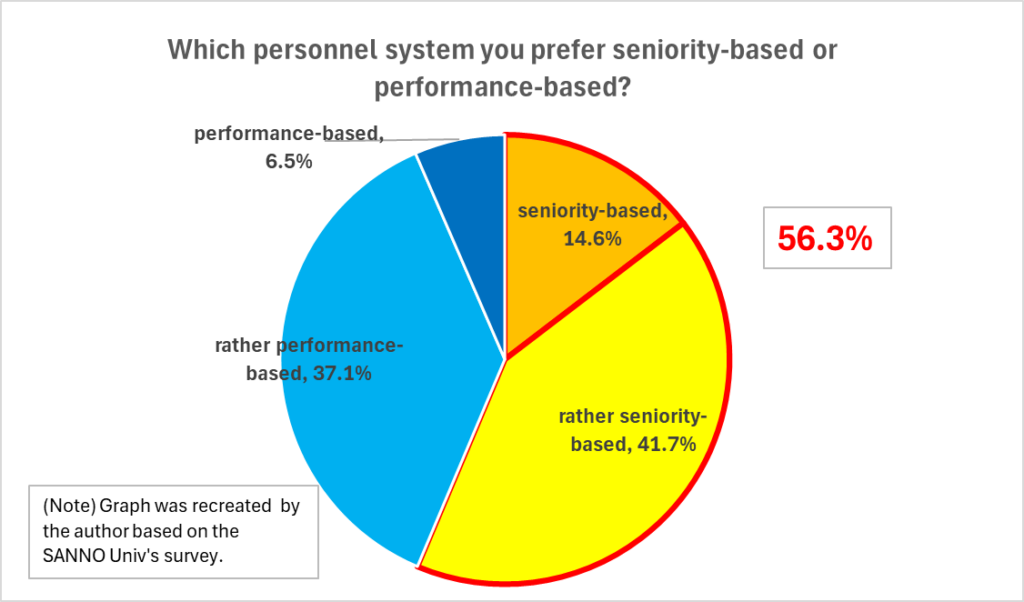
This marks the first time since the survey began that over half of respondents expressed a preference for seniority-based systems. The percentage of new employees who prefer seniority-based systems has been increasing annually since 38.9% in 2022.
In addition, the percentage who want “lifetime employment” stands at 69.4%, also showing an upward trend. These data indicate a strong preference for stability among young people.
Regarding what factors were prioritized when choosing an employer with multiple answers allowed, “benefit package,” “industry type,” and “salary level” ranked as the top three. While factors like ‘benefit package’ and “salary level” have been increasing, “job content” and “job type” showed a decreasing trend.
Why they want traditional employment system
Today’s new employees, Generation Z, were born around the year 2000. Japan’s Gen Z have experienced difficult situations like Lost 30 Decades of Japan, large disasters, and also the COVID-19 pandemic. Therefore, it is said that they have a strong economic realism. So, Japan’s Gen Z prefer the Japanese employment model, which offers stable employment and steady promotion, over performance-based personnel systems.
I understand their economic anxiety because I also have experienced these situations. But I’ve got just two things to worry about.
Risk of relying on Japanese employment systems
First, I believe it is risky to rely on seniority-based promotion and lifetime employment today. That is because even if we desire these systems, reality is moving in the opposite direction.
This is based on my experience as a working adult. The company where I had belonged to adopted seniority-based before, and accumulating years of service would lead to advancement. However, over time, the company gradually began placing greater importance on evaluating work performance and attitude as criterion. I believe many companies beyond the company have also been revising their evaluation systems.
Furthermore, as widely reported in the news lately, some major Japanese corporations have been planning workforce reductions or offering early retirement programs. The reality is that the traditional Japanese employment system is becoming increasingly difficult to maintain due to the accelerating pace of change in the times and the fact that Japanese companies no longer have the same leeway they once did.
Therefore, I felt a bit of concern about the phrase “prefer seniority-based”. I think it’s important for us to consider how we adapt to these societal changes.
Warning to discount what we wanna do
Second, I’m gonna point out the prioritized factors when choosing a job. While the factors like “salary levels” and ‘benefit package’ are prioritized, the factors directly tied to what kind of work they wanna do—such as “job content” and “job type”—tend to be overlooked. I think this approach to job selection is somewhat lacking in discernment.
Nomura Research Institute’s survey2 found that workers who prioritize “fulfillment” – such as finding meaning in their work, personal growth, or societal recognition – showed higher job satisfaction. On the other hand, those who prioritize “workplace ease” –like stability and work-life balance– or who think work is just a way to earn income tend to showed relatively lower job satisfaction.
The SANNO Univ’s survey revealed a tendency among Generation Z to prioritize stability, salary level and benefit package provided by Japanese-style employment while making the priority of job content light. This is precisely the tendency that they overlook “fulfillment” and make importance on “workplace ease”. Based on Nomura Research Institute’s data, such an approach will not increase job satisfaction and may prevent people from achieving a fulfilling career.
Moreover, I believe enthusiastic workers with a positive attitude toward work tend to excel professionally, and it leads to greater satisfaction with their income. Therefore, to make importance on fulfillment is crucial for not only getting meaning of work but also achieving economic satisfaction. Neglecting the aspect may ultimately result in a lack of overall satisfaction.
When we want stability, it’ll move away from us
As I said, young people in Japan want economic stability. I believe it is not younger’s fault, but rather social or economic environment made them like that. However, prioritizing only stability is a risky mindset from two perspectives: the collapse of Japanese-style employment and job satisfaction.
- 学校法人産業能率大学総合研究所「2025年度(第36回) 新入社員の会社生活調査」2025/7/15 https://www.hj.sanno.ac.jp/research-report/assets/files/new-employee-survey2025-01/2025_Company-life-survey_01.pdf ↩︎
- 株式会社野村総合研究所「働く人の満足度につながるのは「働きやすさ」よりも「働きがい」~アンケート調査結果からみる仕事の満足度と幸福度の関係~」2023/9/7 https://www.nri.com/jp/knowledge/report/20230907_1.html ↩︎